Affiliate marketing is simply an online business model where you sign up to promote goods or services from another company. Your primary job is to drive qualified traffic (customers) to the affiliate URL you are provided to promote a product.
If someone makes a purchase from your affiliate site, you earn a commission.
What Are The Benefits of Affiliate Marketing?
Affiliate marketing can be a cost-effective way for businesses to promote their products or services, as the business only pays the affiliate when a customer makes a purchase.
And for an affiliate, it is a great business model since there is no inventory to store and little start up costs.
Additionally, an affiliate can make money 24/7 and if selling products that have recurring billing, can make money over and over with one sale.
How Do I Get Started With Affiliate Marketing?
To get started with affiliate marketing, you can begin by researching various affiliate programs and networks that are available.
For beginners I recommend ClickBank for a couple of reasons:
This site has been around a long time and has a good reputation.
It has a broad range of products and niches, you can probably find something in your chosen niche to promote.
Most products don’t need pre-approval to promote. This is a big one. Many affiliate marketplaces require vendor approval before you can promote a product. The problem is vendors are reluctant to approve a new affiliate with few, or no, prior sales.
How Can I Optimize My Affiliate Marketing Strategy?
There are many ways to optimize your affiliate marketing strategy, here are some tips:
Choose high-quality products and services that align with your website or audience.
Use clear, concise, and honest language when promoting products or services through your affiliate links.
Optimize your website for search engines to increase visibility and drive more traffic.
Utilize social media, email marketing, and other channels to reach a wider audience and increase sales.
Track your results, and adjust your strategy as needed based on the data you collect.
Time To Get Started
For more tips, check out my free resources. You can gain a solid foundation for your affiliate marketing business.
There is a ton of information online. The problem is a lot of it isn’t complete or just isn’t accurate.
Since COVID, it seems that more people are interested in learning how to create income online. I suspect there are 2 main reasons for this:
People found that they enjoyed working from home during the pandemic
People found just how little job security they actually had and wanted to build a business of their own but didn’t want a brick and mortar business.
Affiliate marketing is not new. It’s been around forever, long before the internet. It’s basically just a commissioned sales job. The difference between online sales and offline sales though is huge.
To make sales online you essentially just drive traffic (potential customers) to a webpage. You don’t talk to them, you don’t have to sell them. The sales page does the selling for you.
It’s far less intimidating than working at sales offline!
Steps To Build Affiliate Marketing Business
There are many moving parts in a successful affiliate marketing business. When first starting out it’s easy to get overwhelmed. That’s why I would recommend starting with the basics. As your money and experience increase you can expand your skill set accordingly.
So, start here:
Sign up to an affiliate marketplace. I recommend Clickbank for those just starting out. Other affiliate marketing sites will allow anyone to sign up but when that person tries to promote a specific item they may need vendor approval. Vendors don’t always give their approval to unproven affiliates. So, you may have a hard time finding a product to promote. On Clickbank, though, most products don’t require vendor approval which is why I think it’s the best place to start.
Learn how to drive targeted traffic. If you have the budget you can learn how to create PPC ads and drive traffic via Google Or Bing ads. This is a great method but it costs money and you’ll be paying money testing your ads while you’re learning – you’ll be spending money but probably not making money at first. You can also start with free traffic. Pick one free traffic source to begin with, Facebook, Twitter, Instagram, Youtube, etc., learn all you can about it. Build an audience and then move on and learn another. This will keep the free traffic flowing!
Start building an email list. There are many elements to this: and optin form, follow-up emails, landing pages, etc. It’s not that hard to do but will take a little time to figure out. For that reason, I would begin with the first 2 steps first. But, do start building that list early in your affiliate marketing career.
Get your own website. Buy a domain name and pay for hosting. This too should be done as soon as you can. Why? Because that great channel you created at Youtube or that wonderful Facebook group you’ve created don’t belong to you. It’s not likely unless you break rules, but it could happen that you lose this social media platform for a Terms of Service Violation. You might wake up one morning and all your work is gone. You need your own property and that is a website.
These are the basic steps to get started building a true, profitable, affiliate marketing business.
Keep learning, and most importantly keep doing and you can create the business you want.
There are many reasons for their failure, and in this article I will show you the proper way to start a blog and make money and help you avoid the pitfalls.
But remember, to be successful online you have to be realistic in your expectations. If not, you’ll get disappointed and give up.
Was this article helpful. Why not pin it?
Do these things and you can be successful:
Stay focused on your business.
Continue to learn and gain knowledge.
Apply the knowledge you’ve gained.
Be consistent
Only you can control these things!
Start here…
STEP 1: Pick Your Niche
To start a blog and make money the first thing you need to do is decide on the topic your blog will cover.
Take some time to do this step properly and pick a strong niche and you will set up a strong foundation and increase your chances of success.
But, pick an overly competitive niche and you’ll struggle to stand out or pick a niche that’s too small and you’ll struggle to get enough traffic / customers.
You need a “Goldilocks niche” a niche that has enough interest to be profitable but isn’t so competitive you’ll have a hard time standing out… it’s just right!
To find that niche, start big and drill down. Don’t start a blog in the broad fitness niche. Instead start a blog for new moms (or dads), start a fitness blog for people with limited mobility, for older people, etc.
Any of these sub-niches will have tons of potential customers but they are far more targeted and less competitive that the broad “fitness” category.
STEP 2: Set Up Your Blog
The first step is to pick a domain name. Use these tips to get started:
Pick a name that is 2 or 3 words long
Find a name that is memorable and lets people know what your blog is about
Don’t use anything but a .com name
Try to come up with a few variations, that way if your first choice isn’t available, you have some other ideas in mind!
Next, you’ll need to buy your domain name, set up a hosting account, get a private email address for your domain and get an SSL certificate. This can all be done for around $50 / year.
For all your website needs : Buying your domain name, getting hosting, adding a private email address and an SSL certificate, I recommend NameCheap and the basic “Stellar” plan for now. You can always upgrade as your blog grows.
I’ve been using them for years and their customer service is some of the best I’ve ever used!
They can walk you through every aspect of buying your domain name, setting up hosting, getting your private domain email address and setting up your SSL certificate.
And don’t worry if you don’t understand what any of those terms mean, just let their amazing customer service walk you through the process and you’ll have a great blog ready to go.
When your blog is set up, you can customize it any way you like. Add a logo, change a color scheme, whatever you want!
Don’t worry about a logo either. You can go to Canva.com and create a logo for free. Don’t waste a lot of time stressing about this. It doesn’t have to be perfect and if you want you can change it later. For now just focus on getting your blog up and running as quickly as possible.
At this point your goal isn’t to be perfect it’s to get going!
STEP 3: Add Content To Your Blog
Now that you’ve got your blog set up and looking great (great, not perfect!) it’s time to add content. Content can be articles, videos, infographics, photos, or a combination of all of them.
To choose what types of articles and what topics you should create content about, do some research. A great resource you can use for free is Buzzsumo.com
If your blog is about fitness for people over 50, you can go to Buzzsumo and type in the search phrase, “best exercises for people over 50” or something like that.
You will get the top content ideas along with the count of how many views each of those articles has gotten. Just find an article that has a ton of views and recreate that article.
WARNING: Never, ever, plagiarize. This is the quickest way to ruin your reputation. It’s ok to use someone else’s work for inspiration, but write all content yourself. It’s not ok to go through an existing article and change a word here or a sentence there, you must completely create a new and original piece of content!!!
This step will take some time to do properly. Start with at least 10 original pieces of content. Your posts should have short, punchy paragraphs. This may not be what you learned in elementary school, but it’s how people online like to read their articles.
Keep plenty of white space throughout your articles, and add a few attractive, eye catching images to each post. Also add sub-headings throughout your articles, people tend to skim through articles so make it easy for them to find what they’re looking for!
STEP 4: Monetize Your Blog
There are many ways you can make money with your blog – you can use your blog as a way to drive traffic to another offer such as an eCommerce site.
Or you can sell your own products or services, if you have them, right on your blog.
And, the simplest way to start a blog and make money is to add advertising to your blog!
There are many ways you do this: sign up as a publisher with Google Adsense. They will place ads on your blog, you have control over where they go and what they look like. When one of your blog visitors clicks on an ad, you earn a commission.
Another option is signing up to other affiliate networks such as Clickbank, Amazon, JvZoo, WarriorPlus, Commission Junction, and Share-A-Sale, place ads for some of those products on your blog post pages. When someone makes a purchase through one of those links, you earn a commission.
It’s really simple, in theory, but it will take time and a lot of website visitors before you are earning a full time income.
The sooner you start driving traffic to your blog, the sooner you’ll be making some nice commissions!
STEP 5: Drive Traffic To Your Blog
Getting traffic to your blog is your main job. There are many ways to drive traffic – some of them will cost money and some are free.
One of the best free methods for driving traffic is Pinterest. By adding quality pins on a regular basis, you can grow a loyal following. Every time one of your followers clicks on your pins, they will be taken to your blog.
Tailwind is website that allows you to schedule your pins in advance. In addition, with Tailwind tribes you get more exposure for your pins. When you join tribes in your niche you share their pins with your followers and your tribe mates will share your pins with their followers. That massively increases the exposure your pins receive.
I recommend using multiple methods of driving traffic. But to start, pick one method and learn it inside and out. Then move on to another source, say Google Adwords, SEO, or other paid or free sources. Keep adding traffic sources until you are getting enough traffic to make the income you want!
Final Thoughts
Learning how to start a blog and make money is just the first step. As you grow you’ll want to add email marketing to your blog.
Be patient, keep learning, and be consistent with your efforts and you can create the blogging lifestyle you want!
Marie has been an online entrepreneur for almost 2 decades. Her specialty is affiliate marketing. She has also indulged her more creative side as a freelance writer and website/blog creator.
People flock to affiliate marketing as a way to make money online because it seems so easy.
And, in theory it is.
The concept to affiliate marketing is simple: you sign up to become an affiliate, you send website visitors to the website you get to promote a product then when someone buys that product you receive a commission.
Like the article? Pin it!
Of course, with most things, simple doesn’t mean easy.
This article will give you a great jumping off point, but to ensure you are successful as quickly as possible, you should think about investing in affiliate marketing training too.
In this article I will break down the 5 must do tips you need to know right from the start:
Pick A Niche
Before you sign up for an affiliate program and start sending traffic, you need to decide what types of products or services you want to promote.
You’ve no doubt heard people say you should pick a niche that you’re passionate about, and that’s not bad advice, as far as it goes.
If the niche you love is populated by tons of other people who love it too…and spend money in it, you’re good to go. But if your passion is for something a little more obscure, you need to keep looking.
A good niche has tons of passionate people who buy lots of niche related items. There’s tons of niches to choose from.
For example, start in a huge niche like fitness, food, sports, parenting, etc. than drill down to sub-categories (don’t go too far down or you might get such a small sub-niche that there’s not enough potential customers).
So, instead of choosing the fitness niche why not choose fitness for new moms or fitness for retirees, etc.? These sub-niches will still have tons of potential customers but they won’t be as competitive as the broader fitness niche will be.
Also, spend some time researching the affiliate marketplace you’re considering signing up with. You already know about Amazon.com but some of the other marketplaces may be unfamiliar to you.
Before you promote any product from a marketplace do your due diligence in both the marketplace and the specific product.
You don’t want to promote crappy products to your audience. If you do, they won’t trust you anymore.
Research Your Audience
It’s very important you know who you’re marketing to. If you pick a niche that you’ve personally been involved with for a long time, this part will be a lot easier.
You should already have a really good idea of the people who love your hobby as much as you do. If not, do a little research to find out who your ideal customer would be.
It’s incredibly easy to do, just go to Facebook and create a business page. Then you’ll have access to their audience insights tool. This tool will tell you virtually everything you need to know about the people in your niche.
You can find out which gender is most interested in the niche, the average age, the average level of education, income, whether or not they have children, etc. All of this can provide you with a good idea of who you’ll be “talking to” with the marketing you create.
Get A Website
As an affiliate, you’re main job is to get interested website visitors to the offer you’re promoting.
If you’re just starting and you don’t have your own website, you can send traffic to the web address you were assigned when you signed up to promote a product on some affiliate networks like Clickbank.
This is an acceptable way to start, but only if you absolutely have to due to lack of money.
AND, it’s only a short term fix.
You never want to build your online business on assets you don’t actually own.
Setting up a Facebook page and thinking you’ve got a website is a very bad idea. You don’t own that. Facebook can decide they don’t like something you’re doing and they can boot you off their platform at any time for any reason (this also applies to Instagram, Pinterest, Twitter, etc.).
Using these resources to grow your audience is smart, relying solely on them for your online presence isn’t smart.
Think how you would feel if you spent months, or years, building up an audience on their site and you lost it all overnight…yikes!
These social media sites are only to help you grow your audience and drive traffic to your website. Nothing more!
Since a domain name only costs around $10/ year, and a hosting account can be bought for around $4/ month most anyone can afford to get their own website.
Build An Email List
I’ve heard it over and over, and seen it in action myself – up to 98% of the people you drive to your website won’t make a purchase and they won’t come back.
Let that sink in for a second: all your work to get people to your website will be wasted for almost 98% of your traffic! And, if you’re paying for traffic, it’s even worse!
There are tweaks you can do to your website to increase conversions, but there is always going to be a lot of leakage… it’s just the nature of the beast.
People aren’t as likely to make purchases from you when they just met you. It takes multiple positive interactions before people like and trust you enough to buy something from you.
That’s where an email list comes in. It’s a pretty simple strategy and one you’ve probably already seen in action yourself:
You visit a website and a form pops up offering you a small gift (a free report, discount coupon, etc.)
You enter your name and email address and you receive your freebie either on a thank you page or in an email
You are officially subscribed to their email list and they can continue to legally email you.
Pretty simple. When you sign up you are “opting in” to their list and giving them permission to email you. The good thing is that you can always “unsubscribe” from the list. This is the legal way and all promotional emails must contain an unsubscribe link.
If you use this process of building an email list on your website, and offer all your subscribers truly useful information, you can build a huge list of very loyal customers.
Just don’t abuse them – I use a 3-1 system. For every 3 emails I send only one is a “sales pitch”.
Always offer truly helpful information for your audience and they will stay away from the dreaded “unsubscribe” button and you can make a lot more money and better leverage your website traffic!
Drive Traffic
As I said, your main goal as an affiliate is to drive traffic to your offers. It’s up to you to learn which traffic source is the best fit for your budget, your time and goals.
I personally recommend using some lower cost paid traffic methods at the start while simultaneously building up your free traffic strategies.
Doing so can give you some fast sales while your free strategies are gaining traction.
One of the best free ways to drive traffic is with content marketing.
Content marketing is a very simple method of getting very targeted traffic to your website.
Targeted traffic means the people you are sending to your website are very interested in your product or service and there is a high likelihood they will buy.
You simply add quality content to your site on a regular basis. To expand the reach of your content you can share that content on social media sites like Facebook, Pinterest, Instagram or Youtube.
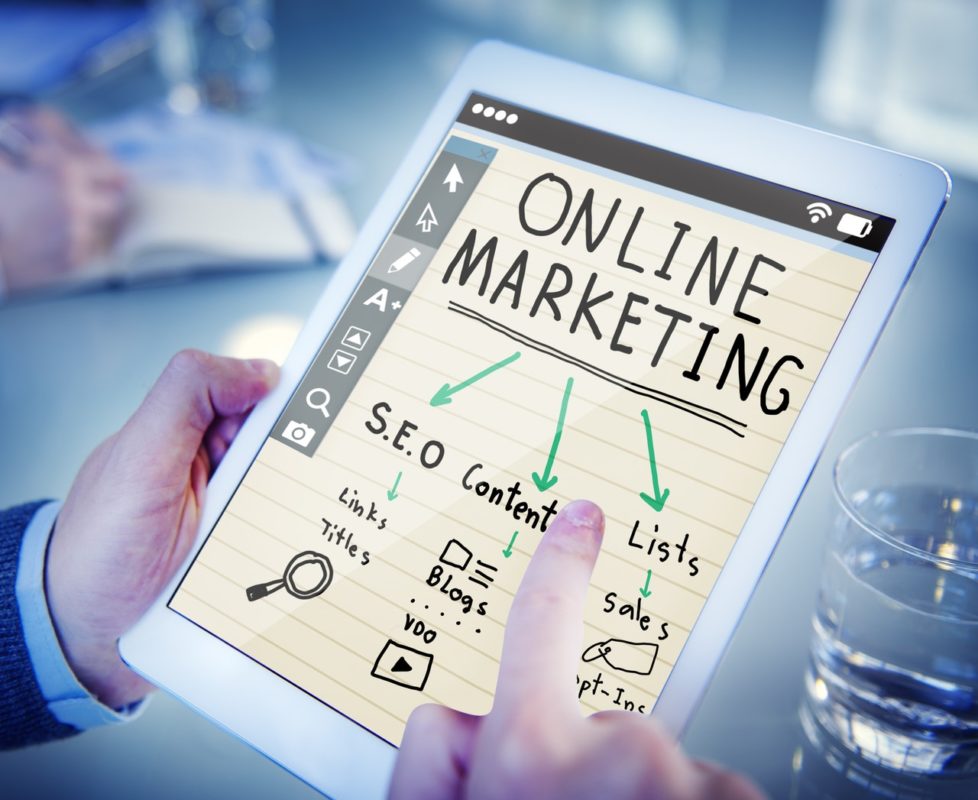
Search engine optimization (SEO) is another great way to increase the reach of your content. By putting targeted keywords in your content, you can increase the chance of your website showing up on the first page of results when someone does a web search using those keywords.
You’ve seen this in action yourself. Remember the last time you searched for something online? Remember the phrase you typed in to find that information? That phrase you typed in was a keyword.
The results that appeared higher on the first page of results were there because those content creators used that keyword in their content. The search engines saw they had the same keyword you searched for and placed those websites at the top of the search results.
S.E.O. should be an important consideration when creating your content. There are even plugins you can use with WordPress website that will improve your SEO.
Just Repeat
Many affiliate marketers have several websites in several niches. That way they optimize their reach. When you have 5-10, or more, websites, you don’t need to make tons of money from any one of them but rather can make a great living even if you only make a little from each website each day.
And, since so much of your work can be automated or outsourced, you may find that running multiple websites isn’t as time sucking as you would think!
Use the steps above to get started with affiliate marketing. Once you’ve got your first website running and profitable you can decide if adding more websites to your online portfolio makes sense for you.
We use cookies on our website to give you the most relevant experience by remembering your preferences and repeat visits. By clicking “Accept”, you consent to the use of ALL the cookies.
This website uses cookies to improve your experience while you navigate through the website. Out of these, the cookies that are categorized as necessary are stored on your browser as they are essential for the working of basic functionalities of the website. We also use third-party cookies that help us analyze and understand how you use this website. These cookies will be stored in your browser only with your consent. You also have the option to opt-out of these cookies. But opting out of some of these cookies may affect your browsing experience.
Necessary cookies are absolutely essential for the website to function properly. These cookies ensure basic functionalities and security features of the website, anonymously.
Cookie
Duration
Description
cookielawinfo-checbox-analytics
11 months
This cookie is set by GDPR Cookie Consent plugin. The cookie is used to store the user consent for the cookies in the category "Analytics".
cookielawinfo-checbox-functional
11 months
The cookie is set by GDPR cookie consent to record the user consent for the cookies in the category "Functional".
cookielawinfo-checbox-others
11 months
This cookie is set by GDPR Cookie Consent plugin. The cookie is used to store the user consent for the cookies in the category "Other.
cookielawinfo-checkbox-necessary
11 months
This cookie is set by GDPR Cookie Consent plugin. The cookies is used to store the user consent for the cookies in the category "Necessary".
cookielawinfo-checkbox-performance
11 months
This cookie is set by GDPR Cookie Consent plugin. The cookie is used to store the user consent for the cookies in the category "Performance".
viewed_cookie_policy
11 months
The cookie is set by the GDPR Cookie Consent plugin and is used to store whether or not user has consented to the use of cookies. It does not store any personal data.
Functional cookies help to perform certain functionalities like sharing the content of the website on social media platforms, collect feedbacks, and other third-party features.
Performance cookies are used to understand and analyze the key performance indexes of the website which helps in delivering a better user experience for the visitors.
Analytical cookies are used to understand how visitors interact with the website. These cookies help provide information on metrics the number of visitors, bounce rate, traffic source, etc.
Advertisement cookies are used to provide visitors with relevant ads and marketing campaigns. These cookies track visitors across websites and collect information to provide customized ads.
Other uncategorized cookies are those that are being analyzed and have not been classified into a category as yet.
We use cookies to ensure that we give you the best experience on our website. If you continue to use this site we will assume that you are happy with it.